
The requirements for sustainable construction influence many of the decisions made in a project. For Louise von Bahr, architect at Equator, this means working with solutions that both meet climate targets and create the right conditions for the architectural design.
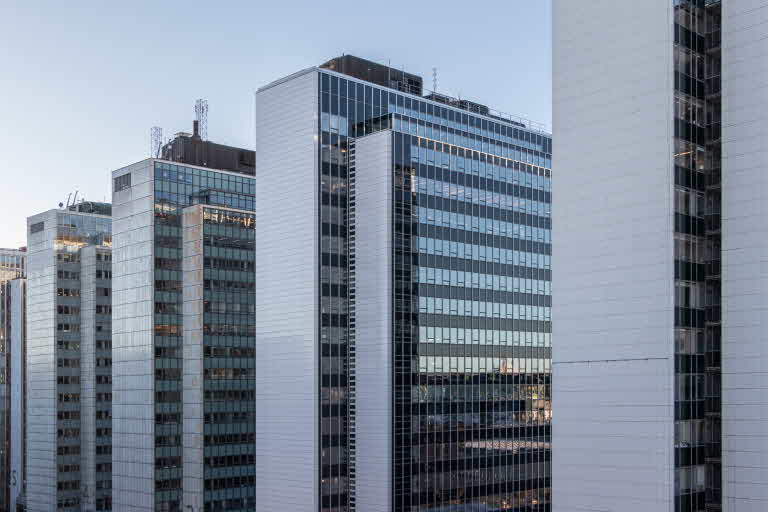
Curtain wall – a building principle that changed the facade
- Article
Curtain wall is one of the most significant building principles in modern architecture. By separating the load-bearing structure from the facade, new possibilities were created for light, lightness, precision and industrialised construction. It is a technique with a long history and continued relevance for the facades of the future.
Behind many of the buildings that have come to define modern architecture lies a simple but crucial idea: to separate the load-bearing structure from the building’s outer layer. When the external wall no longer needed to carry the building, new possibilities opened for architecture, material use and industrialised construction. Curtain wall introduced a light, non-load-bearing facade principle that brought together technology, aesthetics and function in a new way.
It was an innovation that changed more than the facade itself. Buildings could be made more open, more flexible and more precise in their expression. The facade was no longer a heavy boundary against the outside world, but a distinct layer of its own that could let in light, create rhythm and at the same time meet high requirements for climate performance, installation and efficiency. What may seem self-evident today was once a decisive shift in the way building was understood.
From innovation to a modern classic
Its roots lie in the iron, glass and prefabrication technologies of the 19th century, but it was above all during the 20th century that curtain wall made its real breakthrough in the modern city. An early and often-cited example is the Hallidie Building in San Francisco from 1918, which is often highlighted as one of the first buildings in which the glazed facade clearly appears as a separate layer in front of the structure. Here, it became clear what the new building logic could offer: lightness, transparency and a facade that not only protected the building but also gave it a new architectural expression.
In the post-war period, curtain wall became a natural part of modern urban development, including in Sweden. In Stockholm, this can be clearly seen in the Hötorg City towers, where the high-rise building and the industrialised facade system shaped a new city skyline. A few years later, Kulturhuset at Sergels torg gave the same building principle a more public dimension, with the glass facade as an expression of openness, light and contact between building and city.
Why the technique remains relevant
What makes curtain wall so significant is its ability to combine several values at the same time. For the architect, it offers a high degree of freedom in working with proportions, light, material choices and expression. For the developer and the design process, it creates the conditions for high precision, efficient installation and clear interfaces between different parts of the building. And for construction more broadly, curtain wall has become an important part of the development towards more industrialised, predictable and resource-efficient processes.
The technique is well proven and has, for more than a century, been developed and refined in line with new requirements, new materials and new architectural ideals, while the basic principle has remained the same – to free the facade from its load-bearing function and thereby create greater opportunities in both design and construction. That is also why curtain wall remains so relevant.
From that perspective, SCA Curtain Wall becomes a natural continuation of a long, innovation-driven history. Here, a proven and well-established building principle takes on a new form in wood, built on the same core idea of lightness, precision and architectural freedom.
Related content
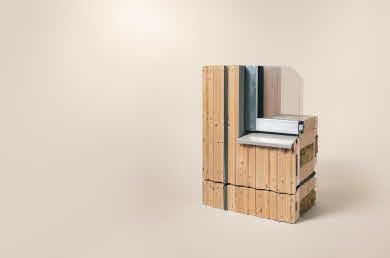
Challenges that drive development
A shared participation in a research project brought the architectural practice Equator and SCA together. It was there that a connection was established which would soon lay the foundation for the innovative facade system SCA Curtain Wall.
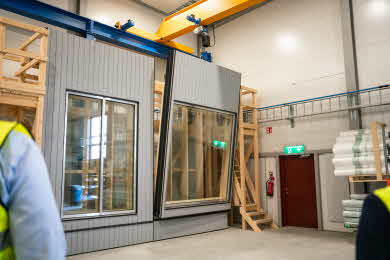
Shorter construction time and lower climate impact
Reducing construction time by several weeks can result in significant savings in larger projects. With a prefabricated wooden facade system, the building can quickly be weatherproofed, and climate impact can be reduced by 60 per cent or more.