
Curtain wall is one of the most significant building principles in modern architecture. By separating the load-bearing structure from the facade, new possibilities were created for light, lightness, precision and industrialised construction. It is a technique with a long history and continued relevance for the facades of the future.
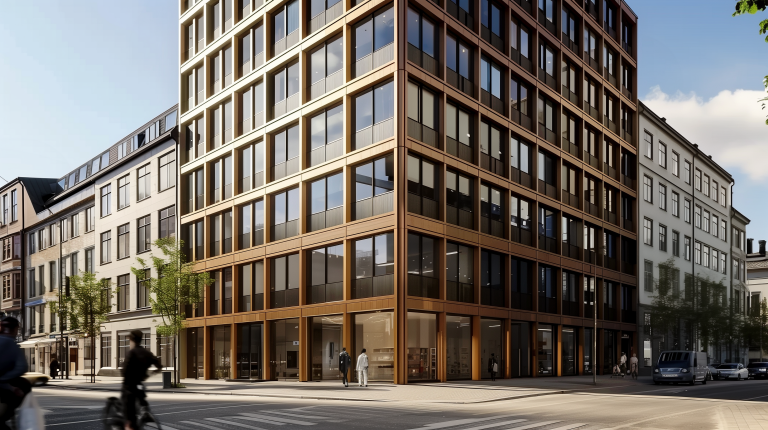
Facade system with architectural freedom
This image is AI-generated.- Article
The requirements for sustainable construction influence many of the decisions made in a project. For Louise von Bahr, architect at Equator, this means working with solutions that both meet climate targets and create the right conditions for the architectural design.
Equator is one of three parties behind the development of SCA Curtain Wall, a facade system in which components traditionally made of metal have been replaced with wood. The result is a system that can reduce climate impact by at least 60 per cent.
“In projects today, climate impact is a key issue, not least because it affects both the requirements set and the conditions of the project,” says Louise.

A tool for achieving climate targets
SCA Curtain Wall consists of prefabricated elements manufactured by Norrlands Trähus and delivered to the construction site ready for installation. The facade system has been developed to be adaptable already at element level, with significant opportunities to vary the expression.
The system is a competitive alternative to traditional facade systems, while also giving architects and developers a concrete tool for achieving their climate targets.
“There are many projects where, for various reasons, you are forced to work with materials that have a high carbon footprint. In those cases, using SCA Curtain Wall can be a way to compensate and create favourable conditions for meeting the requirements set for the project,” says Louise.
A system designed for the architect
The system is designed so that each element can be adapted based on the needs of the project, with variation in, for example, cladding and insulation. At the same time, it creates a clear structure in which some parts can be fixed, while others can be developed freely to shape the building’s architectural expression. For the architect, this means a flexible and user-friendly way of working, designed to meet the needs and challenges that arise throughout the project.
“It’s like a menu, where you can choose different components depending on what the project requires,” says Louise.
This gives the architect a flexible foundation to work from, where both function and expression can be developed within the framework of the system.
SCA Curtain Wall is manufactured from wood from the forests of northern Sweden, with production and installation carried out in close proximity to the raw material. This creates both reliability in delivery and more efficient transport.
“The fact that we can produce and deliver high-quality facade systems locally is, in my view, a major strength,” says Louise.
The work on SCA Curtain Wall shows how new solutions emerge through close collaboration between architecture, industry and production. This type of system creates new opportunities to fundamentally influence both the construction process and climate impact.
“Today, architects have the opportunity to move from being passive recipients of solutions to actively contributing to improving them. I believe that we, as architects, need to become much better at engaging with production and driving product development at a larger scale,” Louise concludes.
Related content
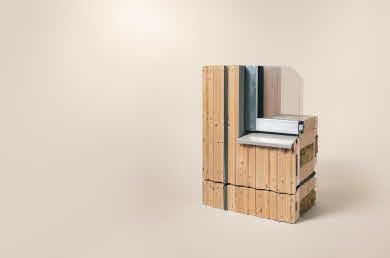
Challenges that drive development
A shared participation in a research project brought the architectural practice Equator and SCA together. It was there that a connection was established which would soon lay the foundation for the innovative facade system SCA Curtain Wall.
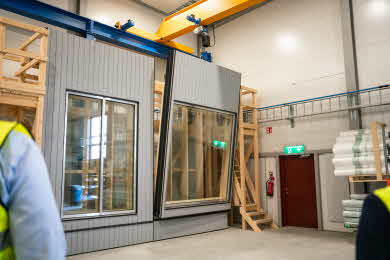
Shorter construction time and lower climate impact
Reducing construction time by several weeks can result in significant savings in larger projects. With a prefabricated wooden facade system, the building can quickly be weatherproofed, and climate impact can be reduced by 60 per cent or more.