Shorter construction time and lower climate impact
Article
Reducing construction time by several weeks can result in significant savings in larger projects. With a prefabricated wooden facade system, the building can quickly be weatherproofed, and climate impact can be reduced by 60 per cent or more.
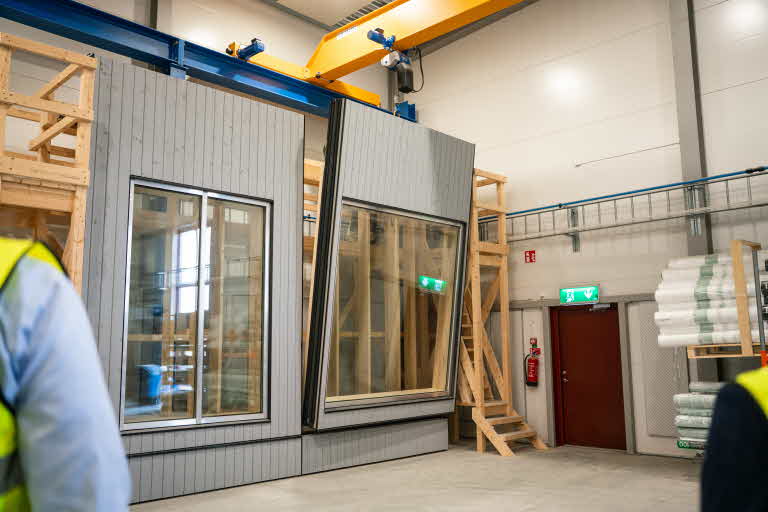
Peter Rhensbo is the CEO of Norrlands Trähus, one of the companies behind SCA Curtain Wall. For him, the key advantage is the ability to combine shorter construction time, lower climate impact and high precision in a single facade system. Behind the time savings is a high degree of prefabrication and a system that, in practice, moves a large part of the work from the construction site to the factory.
Peter Rhensbo.
“One of the strengths of SCA Curtain Wall is that the system can be installed very quickly. You could install three facade elements per hour. In other words, you can get a great deal done in a single working day,” says Peter.
Thanks to the prefabricated elements, the building envelope can quickly be made weather-tight, allowing interior work to begin immediately. The facade elements are installed by crane from the outside, which reduces the need for scaffolding.
“For larger projects, this means that the construction time can be shortened by several weeks, which can result in major cost savings,” says Peter.
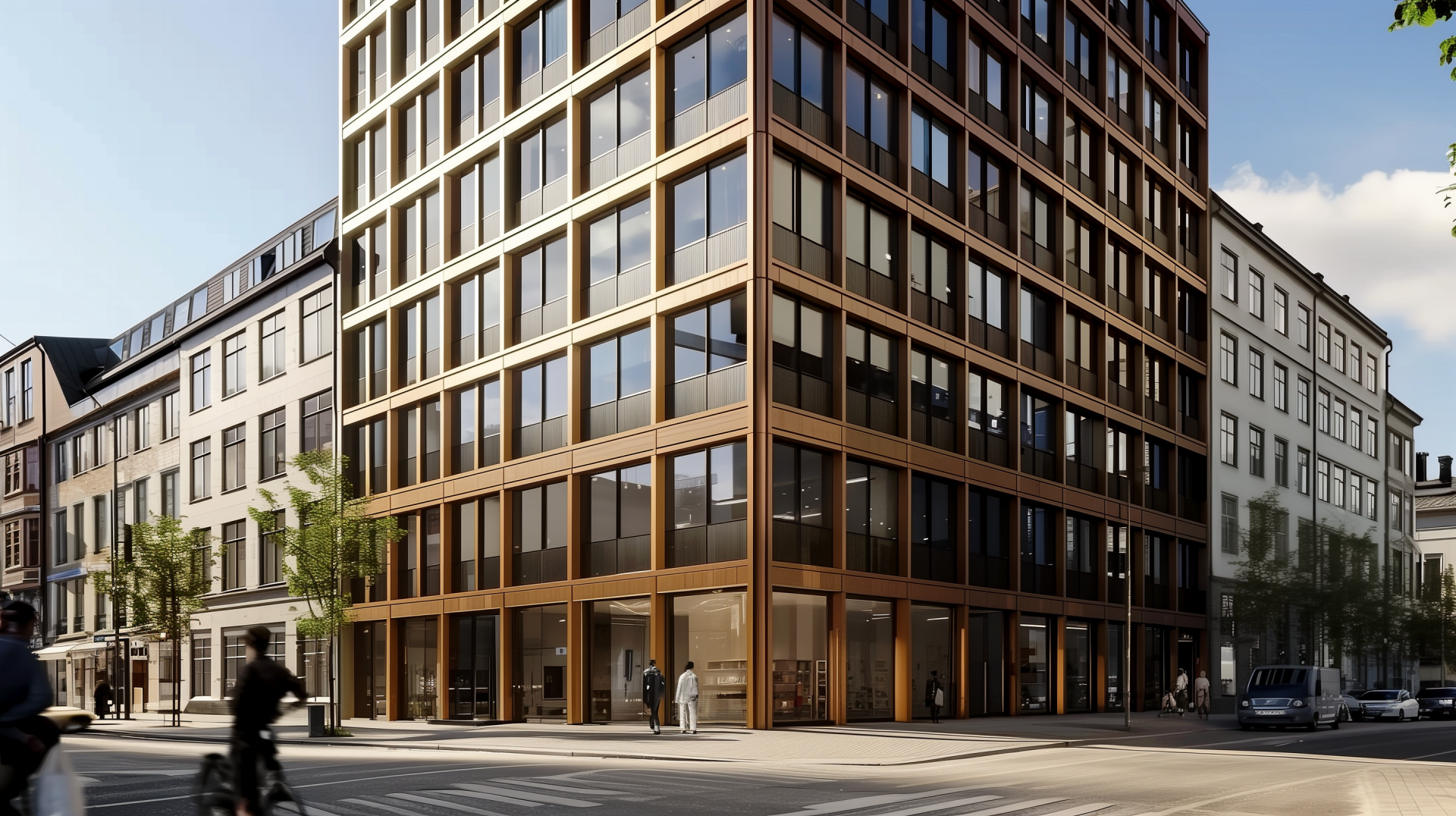
The system not only offers technical advantages, but also provides considerable architectural freedom, with the possibility of combining different facade materials and integrating large areas of glazing without compromising the efficiency of the building system.
Climate requirements driving new solutions
The requirements for new-build projects to meet specific limit values for climate impact are increasing. This is driving a development in which material choices and construction methods are being reassessed.
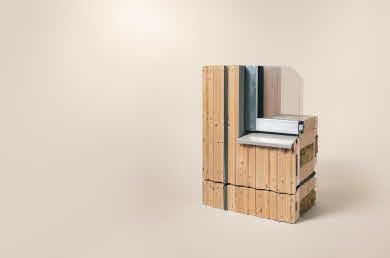
“Today, we are actively working with many of our customers to minimise the amount of metal in projects, in order to reduce carbon levels and meet the climate targets set for the project. Being able to present a product that is almost entirely metal-free is therefore a major step forward,” says Peter.
By minimising the amount of metal, SCA Curtain Wall can help reduce the project’s overall climate footprint. At the same time, this is part of a broader transition in the construction industry, where stricter requirements for climate performance and efficiency are changing how projects are planned and delivered.
“We do not have a tradition of building taller timber buildings, which is why there is a knowledge gap that needs to be addressed. At the same time, the climate requirements mean that we need to change the way we build, and that is where new solutions become an important part of development,” says Peter.
Precision from board to installation
To achieve the full benefit of SCA Curtain Wall, it needs to be integrated early in the project so that the structural frame can be adapted and the solution can be both functional and efficient.
“Our projects are designed in 3D for a high level of precision. Combined with the fact that SCA delivers timber components with tolerances of around one millimetre, this allows us to produce elements that fit exactly. This creates predictability in both production and installation. Once in place, the system is flexible, with adjustment options in the suspension system,” says Peter.
With architectural expertise, material knowledge and industrial production, all three parties behind SCA Curtain Wall can guide clients and designers at an early stage and ensure that the system is used in the best possible way. This creates the conditions to maximise efficiency and climate benefit in each individual project.
“To realise the full potential, we need to be involved early and work together with the project team. That is when we can really make a difference,” Peter concludes.
Partners
Together with our partners, we offer expertise at every stage of the project. Feel free to reach out with any questions.
Curtain wall is one of the most significant building principles in modern architecture. By separating the load-bearing structure from the facade, new possibilities were created for light, lightness, precision and industrialised construction. It is a technique with a long history and continued relevance for the facades of the future.
The requirements for sustainable construction influence many of the decisions made in a project. For Louise von Bahr, architect at Equator, this means working with solutions that both meet climate targets and create the right conditions for the architectural design.
A shared participation in a research project brought the architectural practice Equator and SCA together. It was there that a connection was established which would soon lay the foundation for the innovative facade system SCA Curtain Wall.